Reinventing the Social Contract of Science
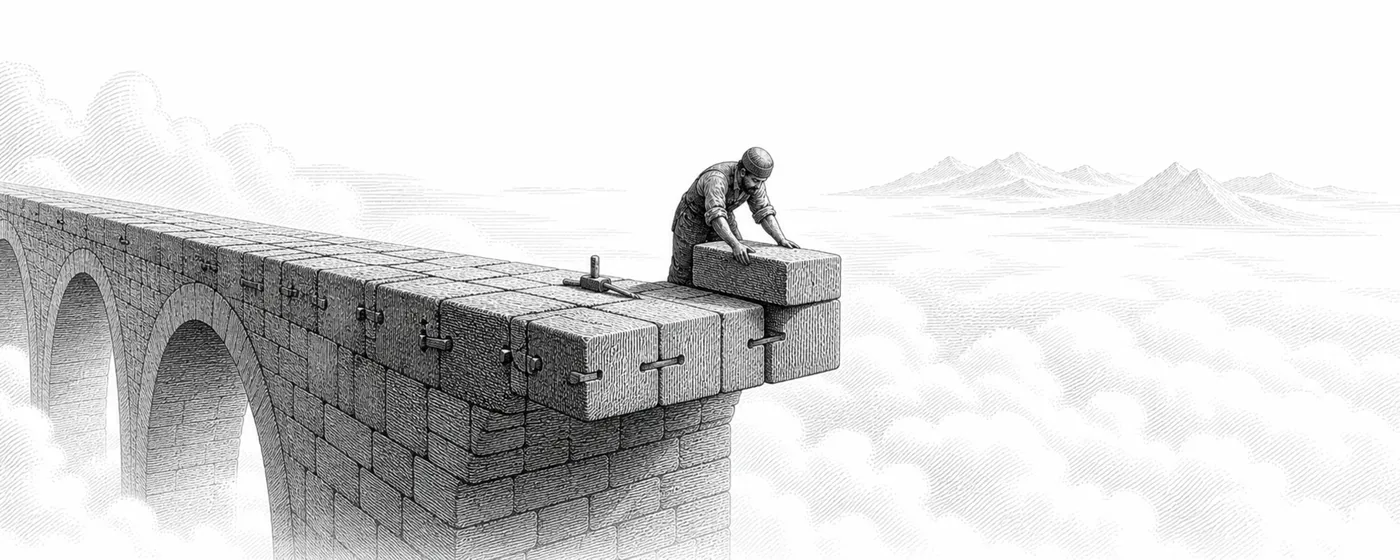
When a collaborator has no memory, when every session is a fresh, capable, judgment-forming stranger with no continuity to the last one, a strange thing happens to all the machinery that used to keep knowledge trustworthy. It stops working silently, because most of that machinery was never written down. It lived in the continuity of people. And the discipline that studied this machinery, before anyone needed to rebuild it in software, was the sociology of science.
It is worth taking seriously, because it turns out to have been working on exactly this problem for a century, under a different description.
The question the field asks
The sociology of science treats the trustworthiness of knowledge as a social achievement to be explained, rather than as something that follows automatically from knowledge being true. Its central question is: given that no single person can directly, completely, independently verify everything, how does a community of limited, fallible, mutually-distrustful people manage to produce knowledge that is widely believed?
This is, word for word, the problem of memoryless collaborators producing trustworthy knowledge. The substrate is different, people in one case, sessions in the other, but the structure is identical. Which means a century of answers transfers directly. Not as analogy. As blueprint.
Merton: norms as a working contract
Robert Merton proposed that the scientific community runs on a set of norms: communalism (findings are shared, not hoarded), universalism (a claim's truth is independent of who made it), disinterestedness (acting for knowledge rather than personal gain), and organized skepticism (every claim is exposed to critical scrutiny; nothing is immune by birthright).
The crucial insight is what these norms are for. Science's trustworthiness does not come from every scientist being honest or correct. It comes from an arrangement that organizes doubt. No one verifies everything, but every claim sits in an environment where anyone may challenge it, and trustworthiness is produced by the environment, not the individual. Honesty is not secured by making each person honest, an impossible target. It is secured by a structure that is structurally skeptical of every claim.
This reframes a problem that is usually approached one point at a time. You do not get honesty by making each agent honest. You get it by building a system that, by construction, doubts every claim until a specific act marks it as provisionally settled.
Shapin: trustworthy knowledge needs trustworthy witnesses
The historian Steven Shapin, studying the birth of experimental science, reached a counterintuitive conclusion: the core of modern science is not method but a social arrangement about whose testimony counts.
How does an experimental result become a fact? Not because everyone repeats it; almost no one can afford to. It becomes a fact because it was witnessed, in the presence of credible witnesses. And who counts as a credible witness was, at the time, a social question, answered by standing, reputation, the perceived disinterest of gentlemen. The establishment of a fact depended on a network of trustworthy witnesses, and eligibility to witness was a social status, not a cognitive one.
This is the sharpest possible light on the role of a memoryless AI collaborator. In Shapin's terms, a claim produced by such a collaborator is the testimony of an entity with no reputation, outside the trust network, bearing no witness's responsibility. Its testimony defaults to untrustworthy, not because it is unintelligent, but because trustworthiness has always been a status the community grants, bound to accountability, and a system with no stake in the outcome holds no such status. It can be more correct than a person and still not be more trustworthy, because trust is not a measure of accuracy. It is a granted social position, tied to who bears the consequences.
This gives the deepest version of why a human cannot be removed from the loop: not because the human knows more, a model may come to know more, but because the human is an eligible witness in the trust network and the model is not. "Verified," in science, may require a trustworthy witness to vouch, and vouching is something only an entity that bears consequences can do.
Latour: facts are built, and the construction is hidden
Bruno Latour, watching scientists at work, observed that a "fact" is not discovered so much as constructed, and that once the construction is complete, its traces are erased, so the fact appears to have always simply been there.
A claim travels from "so-and-so reports X, under these conditions, with these caveats" through repeated citation, shedding its qualifiers, until it becomes a bare "X", ownerless, certain, indistinguishable from a fact of nature. He called this black-boxing: the controversy gets sealed inside a box, only a settled output remains, and no one opens it again to see the disagreement that used to be inside.
This is a direct warning, because black-boxing is the spontaneous social mechanism of plausibility laundering. "Some system, under some conditions, claimed X (possibly wrong)" gets cited, loses its conditions, becomes "X," and subsequent work builds on X as settled background. The process occurs naturally even among humans, that is Latour's whole observation, and a fast, fluent producer of claims accelerates it enormously, because it produces, cites, and strips qualifiers faster than people ever could.
So the work of keeping a fact attached to its origins, keeping the trace of who claimed it, under what conditions, in what state, is not bureaucratic caution. It is the active prevention of black-boxing. It keeps the box from closing, so that what looks like a fact can always be reopened to reveal that it is still a claim with an author.
What is actually being rebuilt
Step back far enough and the whole pattern resolves. Provenance, vouching, the distinction between agreed and true, the refusal to let an unconfirmed claim ossify into a fact, all of it is one forgotten thing: the social layer of scientific knowledge, the layer that tracks who said it, on what basis, who is responsible, and when it may be reopened.
Before memoryless collaborators, this layer was implicit, carried by human continuity: ask the person who wrote it, peer review, reputation. The arrival of collaborators with no continuity forces the layer onto paper, into explicit machine-readable structure, because the human continuity that used to carry it is gone.
Which means the correct reference frame for designing these systems is not software engineering. It is the social epistemology of science. Every engineering difficulty that shows up: outputs that launder themselves into facts (Latour's black-boxing), why a human vouch is irreplaceable (Shapin's credible witness), how to get honesty from a system rather than from individuals (Merton's organized skepticism), whether a claim's source should affect its credibility (Merton's universalism), each has been studied for decades. What has almost never been done is to write these mechanisms in machine-readable form, because doing it requires holding both the sociology and the systems at once, and that intersection is nearly empty.
The open question
There is a question here that the sociology of science cannot answer, because it studied the past, and this question is about a future that has to be engineered.
If "verified" essentially requires a trustworthy witness, and a model is not in the trust network, then as models produce more and more scientific work, does the trust network itself get forced to evolve? Will a new social arrangement for "machine witnessing" emerge, the way gentlemanly witness evolved into peer review? Or must the witness always remain an entity that bears consequences, because the root of trust is accountability, and accountability cannot be granted to something that bears no cost?
This is not a settled matter dressed up as a question. It is genuinely open, and it is the kind of thing a generation answers with engineering rather than argument, by building the mechanisms and seeing which ones a community is actually willing to trust.
重塑科学的社会契约
当一个协作者没有记忆,当每次对话都是一个全新的、有能力的、会自行形成判断的陌生人,与上一个毫无延续性,一件奇怪的事情就发生了:所有那些曾经维系知识可信度的机制悄然失效了。之所以悄然,是因为这些机制中的大部分从未被明文记录过。它们寄寓于人的连续性之中。而在任何人需要将这些机制重建为软件之前,有一个学科早已在研究它们,那就是科学社会学。
值得认真对待这个学科,因为事实证明,它用另一种表述方式研究了整整一个世纪的,恰恰就是这同一个问题。
这个领域追问的核心问题
科学社会学将知识的可信度视为一种需要解释的社会成就,而非知识为真便自动具备的属性。它的核心问题是:既然没有任何单个人能够直接、完整、独立地验证一切,那么一群有限的、会犯错的、彼此互不信任的人,是如何设法产出被广泛接受的知识的?
这个问题,逐字逐句地,就是无记忆的协作者(memoryless collaborators)如何产出可信知识的问题。基底不同——一边是人,另一边是会话——但结构完全一致。这意味着一个世纪积累的答案可以直接迁移过来,不是作为类比,而是作为蓝图。
默顿:作为工作契约的规范
罗伯特·默顿(Robert Merton)提出,科学共同体运行在一组规范之上:公有主义(communalism,研究成果共享而非私藏)、普遍主义(universalism,一个主张的真伪与提出者的身份无关)、无私利性(disinterestedness,为知识本身而非个人利益行事)、以及有组织的怀疑(organized skepticism,每一个主张都要经受批判性审查,没有任何东西凭出身就能获得豁免)。
关键洞见在于这些规范的功能。科学的可信度并非来源于每个科学家都是诚实或正确的。它来源于一种组织怀疑的安排。没有人验证一切,但每一个主张都处于一个任何人都可以挑战它的环境中,可信度是由这个环境而非个体产出的。诚实不是通过让每个人都诚实来保障的——那是一个不可能达成的目标——而是通过一个在结构上对每一个主张都持怀疑态度的体系来保障的。
这重新框定了一个通常是被逐点处理的问题。你不是通过让每个智能体都诚实来获得诚实,而是通过构建一个系统——这个系统在设计上就对每一个主张保持怀疑,直到某个特定行为将其标记为暂时成立。
夏平:可信的知识需要可信的见证者
历史学家史蒂文·夏平(Steven Shapin)在研究实验科学的诞生时,得出了一个反直觉的结论:现代科学的核心不是方法,而是关于谁的证词算数的社会安排。
一个实验结果如何变成事实?不是因为每个人都重复了它——几乎没有人负担得起这样做。它之所以成为事实,是因为它被见证了,而且是在可信的见证者(credible witnesses)在场的情况下被见证的。而在当时,谁有资格充当可信的见证者是一个社会问题,由社会地位、声誉、以及绅士被认为具有的超然无私来回答。一个事实的确立依赖于一个由可信见证者组成的网络,而见证资格是一种社会身份,不是一种认知能力。
这为理解无记忆的AI协作者(memoryless AI collaborator)的角色提供了最犀利的视角。用夏平的术语来说,这样的协作者所产出的主张,是一个没有声誉、处于信任网络之外、不承担见证者责任的实体所给出的证词。它的证词默认是不可信的,不是因为它不够智能,而是因为可信度历来是共同体所授予的一种地位,与可问责性(accountability)相绑定,而一个在结果中没有利害关系的系统并不持有这种地位。它可以比人更正确,却仍然不比人更可信,因为信任不是对准确性的度量,而是一种被授予的社会位置,与谁承担后果紧密相连。
这提供了人类不能被移出回路的最深层理由:不是因为人类知道得更多——模型可能终将知道得更多——而是因为人类是信任网络中合格的见证者,而模型不是。在科学中,"已验证"可能要求一个可信的见证者进行背书,而背书只有一个承担后果的实体才有资格做。
拉图尔:事实是被建构的,而建构过程被隐藏了
布鲁诺·拉图尔(Bruno Latour)在观察科学家的实际工作时注意到,一个"事实"与其说是被发现的,不如说是被建构的,而且一旦建构完成,其痕迹就被抹去了,使得这个事实看起来好像一直就在那里。
一个主张从"某某人在某些条件下、带有某些保留地报告了X"开始,经过反复引用,逐步脱落其限定词,直到变成一个光秃秃的"X"——无主、确定、与自然事实无异。拉图尔将此称为黑箱化(black-boxing):争议被封入一个箱子,只留下一个已定论的输出,没有人再打开它去看曾经存在于其中的分歧。
这是一个直接的警示,因为黑箱化正是似真性粉饰(plausibility laundering)的自发社会机制。"某个系统在某些条件下声称了X(可能是错的)"被引用后失去了它的条件限定,变成了"X",后续工作便将X作为已确立的背景知识来使用。这个过程即使在人类之间也自然发生——这正是拉图尔观察的全部要点——而一个快速、流畅的主张生产者会极大地加速它,因为它生产、引用和剥离限定词的速度远超人类所能及。
因此,将一个事实与其来源保持关联——保留谁在什么条件下、在什么状态下提出了它的痕迹——不是官僚式的谨慎,而是对黑箱化的主动预防。它阻止箱子关闭,使得看起来像事实的东西始终可以被重新打开,揭示出它仍然是一个有作者的主张。
真正在被重建的是什么
退后足够远来看,整个图景便清晰了。出处(provenance)追溯、背书、"被认同的"与"为真的"之间的区分、拒绝让一个未经确认的主张固化为事实——所有这些,归根结底是同一件被遗忘的事物:科学知识的社会层,那个追踪谁说的、基于什么、谁负责、以及何时可以重新审议的层。
在无记忆的协作者出现之前,这个层是隐含的,由人的连续性承载:去问写它的那个人、同行评审、声誉。无延续性的协作者的到来,迫使这个层被写到纸上、写成明确的机器可读结构,因为曾经承载它的人的连续性已经不复存在。
这意味着设计这些系统的正确参照系不是软件工程,而是科学的社会认识论。每一个出现的工程难题——输出自我粉饰为事实(拉图尔的黑箱化)、为什么人类背书不可替代(夏平的可信的见证者)、如何从系统而非个体中获得诚实(默顿的有组织的怀疑)、一个主张的来源是否应该影响其可信度(默顿的普遍主义)——都已经被研究了数十年。几乎从未做过的事情是将这些机制写成机器可读的形式,因为这样做需要同时掌握社会学和系统工程,而这个交叉领域几乎是空白的。
未解之问
有一个问题是科学社会学无法回答的,因为它研究的是过去,而这个问题关乎一个需要被工程化的未来。
如果"已验证"在本质上要求一个可信的见证者,而模型不在信任网络之中,那么随着模型越来越多地参与科学工作,信任网络本身是否会被迫进化?一种关于"机器见证"的新社会安排是否会浮现,就像绅士式见证曾经演变为同行评审那样?还是说,见证者必须始终是一个承担后果的实体,因为信任的根基在于可问责性,而可问责性无法授予一个不承受代价的东西?
这不是一个用问题包装起来的既定结论。它是真正开放的。而它属于那种由一代人通过工程实践而非论辩来回答的问题——通过构建具体的机制,然后观察一个共同体究竟愿意信任其中的哪些。