Taste: The Bar After Correct
Agents now produce work that passes every check and still reads generic. Taste is the next bar. Paul Graham's essay "Taste for Makers" argues that taste can be wrong, and that argument is what lets a skill teach it.
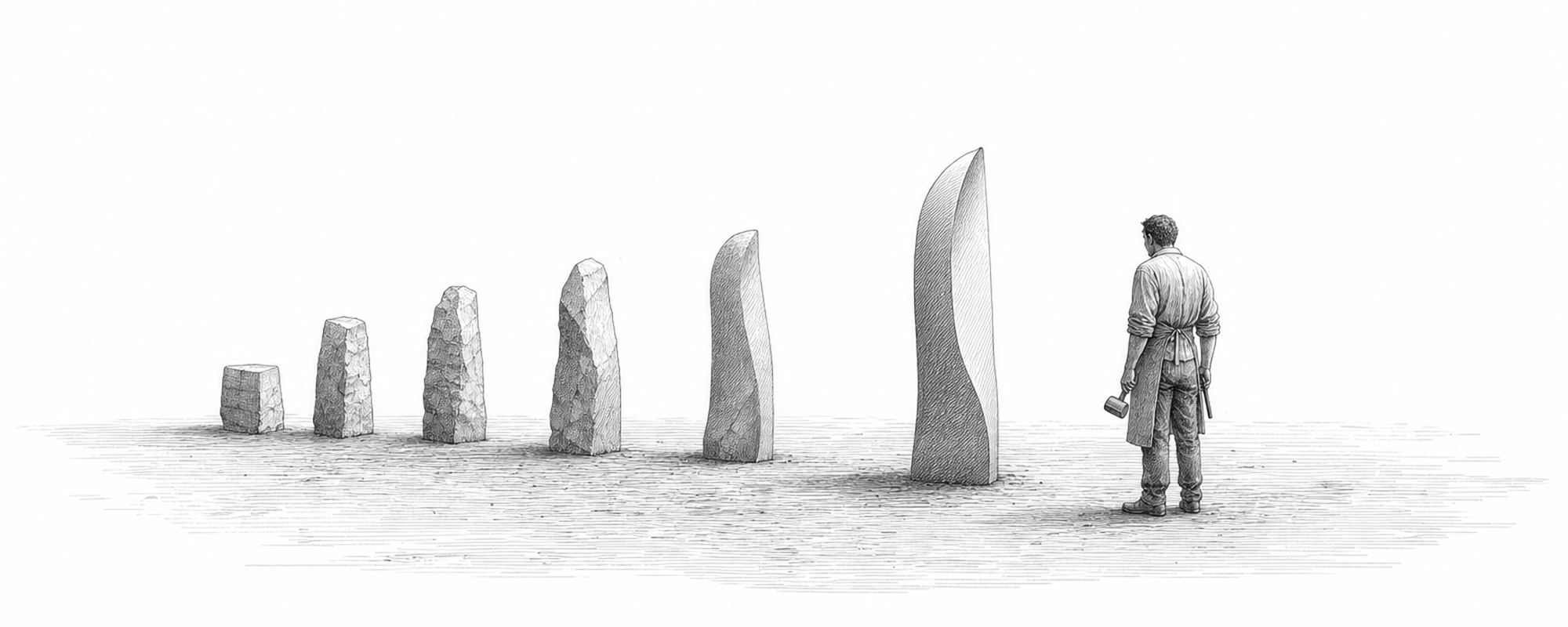
taste is a skill for work that is correct but unsatisfying. It gives the model a method and a set of tests for judging a design, a diagram, a document or a code structure, and for making it better. The skill paraphrases Paul Graham's 2002 essay “Taste for Makers”, and adds one technique of its own.
This essay explains why a skill about taste can exist, the case that shaped it, and how the skill was made. The best evidence comes from the skill's own first draft, which failed in the way the skill is meant to prevent.
Correct is not good
My agents now often produce work that passes every check that I write. The tests pass. The page builds. A script confirms that no label overlaps another. And the result still reads generic: a page that looks like every other page, a diagram that is a stack of boxes, a paragraph that says nothing wrong and nothing particular.
A check can measure only what I can write as a rule. Generic work satisfies rules easily, because rules describe the floor. Above the floor there is a second bar: the work is good for the person who uses it. I call that bar taste.
The word causes a problem. If taste is personal preference, then nobody can teach it, and a skill about it is only a list of my likes. So the skill needs an argument that taste is more than preference. Graham's essay supplies one.
Graham's argument: taste can be wrong
Graham starts from an observation about makers. If taste were only preference, then everyone's taste would already be perfect, and nobody could improve. But makers do improve. When they look back, they see that their earlier taste was worse, not merely different. So taste can be wrong, and the difference between good and bad work is something that a person can study.
He adds a second point. The same qualities mark good work in many fields: a short proof, a well-composed painting, a sound building, a clean program. So a lesson from one field can help to judge another. Most of the essay is a list of these qualities: good design is simple, timeless, suggestive, often slightly funny, hard, and so on.
The two points together make taste teachable to a model. A model cannot inherit my preferences. It can apply principles that recur across fields, and it can give evidence for each judgment.
The essay also warns against a sequence that I had in mind. I thought of correctness first and taste second. Graham's examples point the other way: a sense that something is ugly is often how a real flaw is found. He mentions Copernicus, who was bothered by the awkward machinery of the older astronomy. So the skill does not treat taste as polish after the real work. A diagnosis of ugliness can be a diagnosis of an error.
What the skill does
The skill has five steps and twelve tests.
The steps are the method:
- Diagnose. The model says what is ugly or unsatisfying, element by element, and backs each complaint with knowledge of the field, a comparable example, or how the thing is actually used.
- Name the problem. The model states who uses the thing, at what moment, and what they need then. It marks each part that it assumed.
- Find the organising idea. The model names the one idea that the work hangs on, and makes the hierarchy show it. This step is mine, not Graham's, and the skill marks it as an addition.
- Revise. The model makes a substantive revision aimed at the weaknesses from step 1 and compares it with the original. Graham notes that good work is usually redesign.
- Test. The model applies the tests that bear on the work, each with evidence.
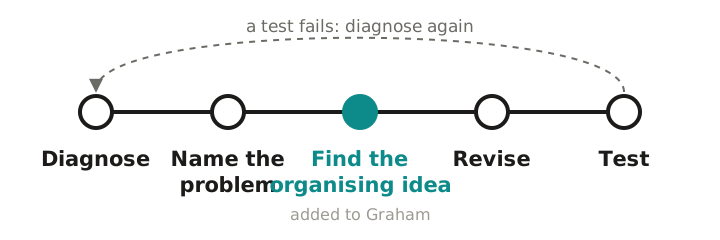
The tests are Graham's principles written as questions. For example, the test for simplicity asks whether every element serves the need from step 2, or makes a stated contribution such as pleasure or identity. The test for symmetry asks whether repetition simplifies the work or stands in for a decision. Each step has a completion criterion, so the model knows when the step is done. Step 1 is done when each complaint names an element and its evidence.
Where taste bites: a diagram that passed every check
The third step comes from a real case from a few days before I wrote the skill. Agents drew diagrams of multi-step analysis plans: what runs, in what order, and where a person must decide. A script checked each drawing for what a script can check: every step was present, and no text overlapped or ran out of its frame.
The first round of drawings passed every check. Each one read as a document. Every step was a box with a paragraph in it, and every plan had the same shape: a stack of white cards. Nothing in the drawing said what this plan was about.
In the skill's first step, the diagnosis names an element and its evidence. The element was the boxes of text. The evidence was the use: the person looks at the drawing to see where work runs and where they must act, and the full description of each step is already in a side panel. So the drawing repeated the panel and hid the shape.
The second round asked each drawing to commit to one visual idea. The best one was a subway map. Each line was a place where work runs. The main line stepped down like a staircase as the work moved from one place to the next. A part of the work that took a different route left the main line as a dashed detour. A decision became a gate that the person stands at. The step that the plan hinges on was drawn larger, and housekeeping steps were small.
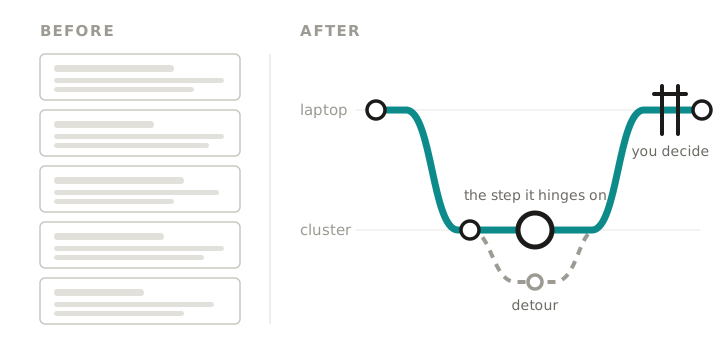
Both rounds passed the same checks. Only the second could be read at a glance. When I looked at it, I also found that a text column beside the drawing was now unnecessary, because my attention stayed on the map. That is the simplicity test in practice: the column no longer served the need.
The examples in step 3 of the skill (a subway map, a gate where the user stands, one table that threads through every output) come from this case.
How the skill was made
I asked Claude to draft the skill from the essay. Claude used the levers from my writing-for-agents skill: steps with completion criteria, a description that starts with its leading word, and instructions in positive form.
Then a GPT model (GPT-6 Astra) reviewed the draft independently. It fetched the essay, compared each principle with the skill, and checked how an agent would behave with each line. It found no copied passages. Its verdict was still “fix,” for one main reason: the draft had turned Graham's qualified observations into rigid rules.
Four examples:
- Size. The draft said that the part the work hinges on must be the largest. The rule echoes the diagram case above, where a larger step was the right choice for that plan. As a general rule, it is wrong: Graham says nothing of this kind, and the rule can damage a design. In a chart, size often encodes a quantity. On a form, the main button needs prominence, not the most space. The fixed step says that the central task must be recognisable at first look, by position, weight or size as the medium allows.
- Ornament. The draft told the model to strip ornament. Graham's objection is narrower: ornament is fine until it disguises a weak form. The fixed test removes decoration that hides a weak structure, and keeps decoration that adds to a sound one.
- Redesign. The draft required a second version with a different central idea. Graham says that experts expect to throw early work away, and that good tools make mistakes easy to fix. He does not say that each revision must replace the idea. The fixed step asks for a substantive revision of the weaknesses that step 1 found. The central idea may survive.
- Nature. The draft listed a map, a ledger and a hull built like a ribcage as “proven forms” under the principle about nature. Graham's point is specific to natural forms, and he adds a warning: early aircraft that copied birds failed because the technology could not yet support the copy. The fix split the test in two. One test covers natural forms and asks why the borrowing fits the current constraints. The other covers human precedents and asks the model to name the precedent and why its answer applies.
The review also found a dropped qualification at the end of the essay. Graham says that great work often starts from dissatisfaction, but dissatisfaction is not enough: the maker needs enough knowledge of the field to see what to fix. The first draft kept the dissatisfaction and lost the knowledge. The fix moved it into step 1, which now requires evidence for each complaint.
I think this episode is the best argument for the skill. The draft was a correct-looking document. Every line was clear, positive and checkable. And it was wrong in the way that generic work is wrong: it replaced judgment with rules that are easy to check. The lever that helped most, a completion criterion for each step, also pulled the draft toward rules, because “the largest element” is easier to check than “recognisable at first look.” The fix kept Graham's qualifications and put the demand somewhere else: each judgment now needs evidence.
A second model found the problem because it read the source with different blind spots from the model that wrote the draft.
What the skill cannot do
The skill does not supply knowledge of a field. Graham notes that good work tends to happen where capable people work on related problems. When the model lacks the knowledge to judge, the skill tells it to find the field's strong work or a practitioner's criticism, and to judge against that.
The tests are questions, not scores. A model can still answer a question with a weak reason. The completion criteria ask for evidence, which makes a weak reason visible, but they do not make it impossible.
The skill is new. I have the design reasons, the review, and the diagram case. I do not have a measured result yet.
How to use the skill
taste is in my skill collection, and the skill instructions are public. Read Graham's essay too. The skill paraphrases it, and a judgment that turns on his argument should go back to the source.
For a review, I start with this request:
Use taste on this. Say specifically what is unsatisfying and why, name who uses it and when, find the idea it should hang on, and propose a concrete revision. Test the revision against the principles that apply, with evidence.
Taste:对了之后的那道门槛
现在的智能体常常交出检查全部通过、读起来却很平庸的东西。品味是下一道门槛。Paul Graham 在《Taste for Makers》里论证了品味可以是错的,正是这个论证让技能能够教会品味。
taste 是一项技能,处理“对了但不够好”的作品。它给模型一套方法和一组检验,用来评判一个设计、一张图、一份文档或一种代码结构,并把它改得更好。这项技能转述了 Paul Graham 2002 年的文章《Taste for Makers》,另外加了一个它自己的技巧。
本文说明三件事:为什么关于品味的技能能够成立,塑造它的那个案例,以及这项技能是怎样写出来的。最有力的证据来自技能自己的初稿:初稿犯的错,正是这项技能要防止的那种错。
对,不等于好
现在,我的智能体常常能交出通过我写的所有检查的东西。测试通过,页面能构建,脚本确认没有标签互相重叠。但结果读起来仍然平庸:页面和别的页面长得一样,图是一摞方框,段落没有一句错话,也没有一句有特点的话。
检查只能衡量我能写成规则的东西。平庸的作品很容易满足规则,因为规则描述的是底线。底线之上还有第二道门槛:作品对使用它的人来说是好的。我把这道门槛叫作品味(taste)。
“品味”这个词会带来一个问题。如果品味只是个人偏好,就没有人能教它,一项关于品味的技能也只是我的喜好清单。所以这项技能需要一个论证:品味不只是偏好。Graham 的文章提供了这个论证。
Graham 的论证:品味可以是错的
Graham 从创作者的一个现象出发。如果品味只是偏好,那么每个人的品味本来就是完美的,谁也不可能进步。但创作者确实会进步。回头看时,他们会发现自己以前的品味更差,而不只是不同。所以品味可以是错的,好作品和坏作品之间的差别是可以研究的。
他还补充了一点:在很多领域里,好作品有相同的特征,比如一个简短的证明、一幅构图出色的画、一座结实的建筑、一段干净的程序。所以,一个领域的经验可以帮助评判另一个领域。文章的大部分篇幅就是列出这些特征:好设计是简单的、经得起时间的、有暗示性的、常常带点幽默的、困难的,等等。
这两点合在一起,让品味变得可以教给模型。模型无法继承我的偏好,但它可以运用在各个领域反复出现的原则,并为每个判断给出证据。
这篇文章还纠正了我原来的一个顺序。我原本以为先求正确,再讲品味。Graham 的例子指向相反的方向:觉得某个东西丑,往往正是发现真实缺陷的途径。他提到哥白尼:哥白尼正是因为旧天文学那套笨拙的机制让他不舒服,才去寻找更好的解释。所以这项技能不把品味当作正式工作之后的打磨。对“丑”的诊断,也可能是对错误的诊断。
这项技能做什么
技能有五个步骤和十二项检验。
五个步骤是方法:
- 诊断。 模型逐个指出哪里丑、哪里不满意,并用领域知识、可比的例子或东西的实际用法来支撑每一条意见。
- 说清问题。 模型说明谁在用这个东西、在什么时候用、那时需要什么,并标出哪些部分是它假设的。
- 找到统领全局的想法。 模型说出作品所依托的那一个想法,并让层次结构体现它。这一步是我加的,不是 Graham 的,技能里也标明了这是补充。
- 修改。 模型针对第 1 步发现的弱点做实质性的修改,并和原作比较。Graham 指出,好作品通常是重新设计出来的。
- 检验。 模型逐项运用与作品相关的检验,每一项都给出证据。
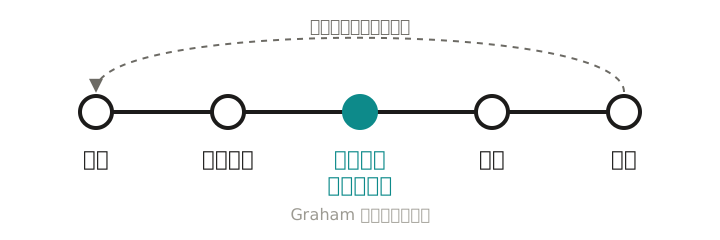
十二项检验是把 Graham 的原则写成问题。例如,简单性检验问:每个元素是否服务于第 2 步说清的需要,或者有明确的贡献,比如带来愉悦或体现身份。对称性检验问:重复是在简化作品,还是在代替一个本该做出的决定。每个步骤都有完成标准,模型由此知道这一步什么时候算完成。第 1 步的完成标准是:每条意见都指明了一个元素和它的证据。
品味起作用的地方:一张通过了所有检查的图
第 3 步来自一个真实案例,发生在我写这项技能的几天前。几个智能体为多步骤的分析计划画图:哪些工作要运行,按什么顺序,人在哪里要做决定。一个脚本检查每张图里脚本能检查的东西:每个步骤都在,没有文字重叠,也没有文字超出边框。
第一轮的图全部通过了检查,但每张图读起来都像一份文档。每个步骤是一个方框,里面装着一段文字;每个计划的形状都一样:一摞白色卡片。图里没有任何东西告诉你这个计划在讲什么。
按技能的第 1 步来读,诊断要指明元素和证据。元素是那些装满文字的方框。证据是用法:人看这张图,是为了知道工作在哪里运行、自己在哪里要采取行动,而每个步骤的完整说明已经放在侧边面板里了。所以,这张图重复了面板的内容,却把形状藏了起来。
第二轮要求每张图选定一个视觉构思。最好的一张是地铁线路图。每条线是一个运行工作的地方。主线像台阶一样往下走,表示工作从一个地方转到另一个地方。走另一条路线的那部分工作,用一条虚线支线离开主线。一个决定画成一道闸门,人就站在闸门前。计划所依托的那一步画得更大,杂务性的步骤画得小。
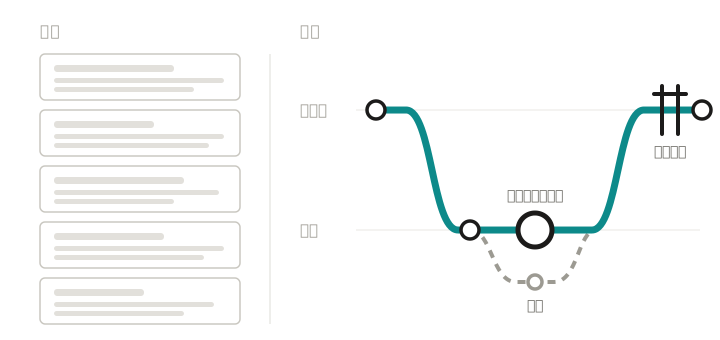
两轮都通过了同样的检查,只有第二轮能一眼读懂。我看这张图时还发现,图旁边那栏文字已经没有必要了,因为我的注意力一直停在线路图上。这就是简单性检验的实际作用:那栏文字不再服务于需要。
技能第 3 步里的例子(一张地铁线路图、一道用户站在前面的闸门、一张贯穿所有输出的表)都来自这个案例。
这项技能是怎样写出来的
我让 Claude 根据文章起草这项技能。Claude 用了我的 writing-for-agents 技能里的几个手段:每个步骤带完成标准,描述以引导词开头,指令用正面表述。
然后,一个 GPT 模型(GPT-6 Astra)独立审阅了草稿。它取回原文,把每条原则和技能逐一对照,并检查智能体读到每一行时会怎样做。它没有发现照抄的段落,但结论仍然是“需要修改”,主要原因只有一个:草稿把 Graham 带有限定条件的观察,变成了僵硬的规则。
四个例子:
- 大小。 草稿说,作品所依托的那部分必须最大。这条规则呼应了上面的计划图案例,在那张图里,把关键步骤画大是对的。但作为通用规则,它是错的:Graham 没有说过这种话,这条规则还可能损害设计。在图表里,大小常常表示数量;在表单里,主按钮需要的是醒目,而不是占最大的面积。修改后的步骤要求:中心任务一眼就能认出来,至于靠位置、粗细还是大小,看媒介允许什么。
- 装饰。 草稿让模型去掉装饰。Graham 反对的范围要窄得多:装饰本身没问题,问题在于它掩盖了薄弱的形式。修改后的检验去掉掩盖薄弱结构的装饰,保留为扎实结构增色的装饰。
- 重新设计。 草稿要求第二版必须换一个中心想法。Graham 说的是,行家预料到早期作品要扔掉,好工具让错误容易修正。他没有说每次修改都必须替换想法。修改后的步骤要求针对第 1 步发现的弱点做实质性修改,中心想法可以保留。
- 自然。 草稿在“像自然”这条原则下,把地图、账本和像肋骨一样的船体都列为“经过验证的形式”。Graham 的观点专指自然的形式,而且他附了一个提醒:早期模仿鸟的飞机失败了,因为当时的技术还撑不起这种模仿。修改把这项检验一分为二。一项针对自然的形式,要求说明这种借用为什么适合当前的约束;另一项针对人造的先例,要求说出先例是什么、它的答案为什么适用于这里。
审阅还发现,文章结尾的一个限定条件丢了。Graham 说,伟大的作品常常从不满开始,但光有不满不够:创作者要对这个领域了解得足够深,才知道该修什么。初稿保留了不满,丢掉了知识。修改把它放进第 1 步,现在每条意见都要有证据。
我认为,这段经历是这项技能最好的论据。草稿是一份看起来正确的文档:每一行都清楚、正面、可检查。但它错的方式正是平庸作品错的方式:用容易检查的规则代替了判断。最有用的那个手段(给每一步写完成标准)也把草稿推向了规则,因为“最大的元素”比“一眼能认出来”更容易检查。修改保留了 Graham 的限定条件,把要求放到了别处:每个判断现在都需要证据。
第二个模型之所以能发现问题,是因为它读原文时的盲区和写草稿的模型不同。
这项技能做不到什么
这项技能不提供领域知识。Graham 提到,好作品往往出现在一群能干的人研究相关问题的地方。当模型缺乏评判所需的知识时,技能让它去找这个领域的优秀作品或行家的批评,以此为标准来评判。
检验是问题,不是分数。模型仍然可以用一个薄弱的理由来回答问题。完成标准要求证据,这让薄弱的理由显露出来,但不能让它消失。
这项技能是新的。我有设计理由、那次审阅和计划图的案例,还没有测量过的结果。
怎样使用这项技能
taste 收录在我的技能合集里,技能说明是公开的。也请读一读 Graham 的原文。技能只是转述,如果某个判断取决于他的论证,应该回到原文。
做评审时,我用这样的请求开头:
用 taste 看一下这个。具体说出哪里不满意、为什么,说清谁在什么时候用它,找出它应该依托的那个想法,并提出具体的修改方案。再用相关的原则检验修改后的版本,每一项都给出证据。